 Finowl
Gender prediction · Fintech
Gender analytics from names for fintech audiences
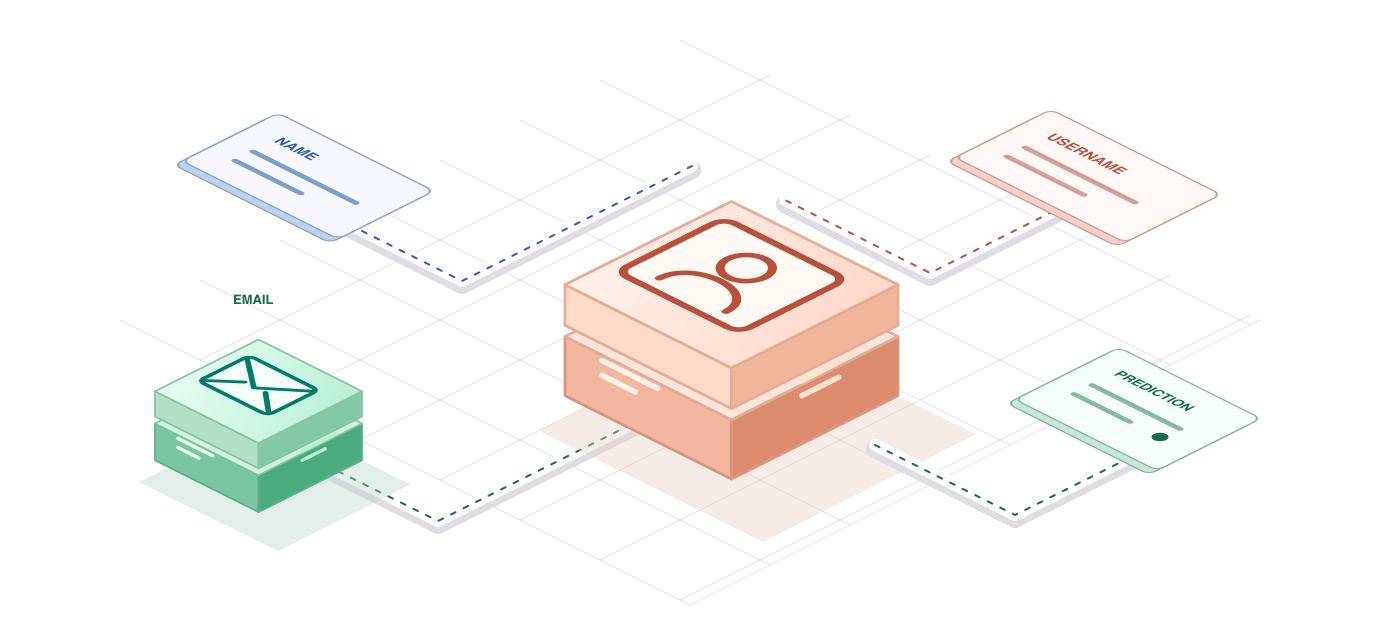
Fintech marketing and research teams often want to know whether a savings campaign or investing feature reaches a balanced audience. The Finowl gender API estimates how a first name is typically used, with a confidence score and the evidence behind it, so analysts can build aggregate dashboards without asking every customer another question during a regulated onboarding flow.
In financial services the boundary is strict. A prediction is a statistical estimate, not how a person identifies, and it is wrong for some people. Never let it touch underwriting, credit limits, pricing, fraud decisions or account access. Keep it in aggregate reporting, let customers state their own gender if you ask at all, and mention the lookup in your privacy notice.
USE CASES
Where it fits in fintech
Campaign reach reporting
Run a batch over anonymized signup cohorts to see whether a new investing feature attracts a broad audience, then report results as aggregate percentages with unknowns shown as their own category.
Financial inclusion research
Compare aggregate estimated distributions across products to spot where educational content or outreach may be missing groups, without attaching predictions to individual customer records used by operations.
Survey weighting checks
Before publishing results from a customer survey, estimate the gender mix of respondents in aggregate to see whether the sample looks skewed compared with your broader customer base.
Greeting copy for newsletters
Choose between neutral greeting variants in a marketing newsletter only when confidence is high, defaulting to neutral wording otherwise and never altering financial terms or offers.
HOW TO INTEGRATE
The workflow
- 1
Export first names and an optional country code from your analytics warehouse, separate from production account systems.
- 2
Group up to 50 records per call and send them to POST /v1/gender/batch with unique ids.
- 3
Store only the gender, confidence and result_status needed for aggregate tables, keyed to the analytics record.
- 4
Treat unknown results and low-confidence predictions as their own bucket instead of forcing a guess.
- 5
Report aggregates only, and keep the derived field out of any table used by credit, pricing or fraud models.
curl https://api.finowl.co/v1/gender/batch \
  -H "Authorization: Bearer $FINOWL_API_KEY" \
  -H "Content-Type: application/json" \
  -d '{
  "items": [
    {
      "id": "cohort-q3-001",
      "type": "name",
      "value": "Andrea",
      "country": "IT"
    },
    {
      "id": "cohort-q3-002",
      "type": "name",
      "value": "Andrea",
      "country": "US"
    },
    {
      "id": "cohort-q3-003",
      "type": "name",
      "value": "Priya"
    }
  ]
}'
Batch items default to dataset-only mode and cost 1 credit each. The country hint matters: Andrea leans differently in Italy and the US.
GOOD PRACTICE
Before you ship
Never use predicted gender for credit, pricing, limits, fraud scoring or account access. In financial services that risks discrimination and undermines customer trust.
Predictions are personal data. Disclose the lookup in your privacy notice, minimize what you store and keep the field separate from regulated decisioning systems.
If gender matters for a customer-facing feature, ask people directly with an optional, editable field that includes non-binary and prefer-not-to-say options.
Read the API reference for every field and error code. Each lookup costs 1 credit (3 when it requests AI); see pricing.
A FEW GOOD QUESTIONS
Common questions
More for fintech
Gender analytics from names for fintech audiences
Start with 100 free credits every month and test the request above in the sandbox.